Sturmius Wehner Stiftung Zukunft


Sturmius Wehner Stiftung Zukunft
Sturmius Wehner Foundation Future
CHILDREN * EDUCATION * ENVIRONMENT
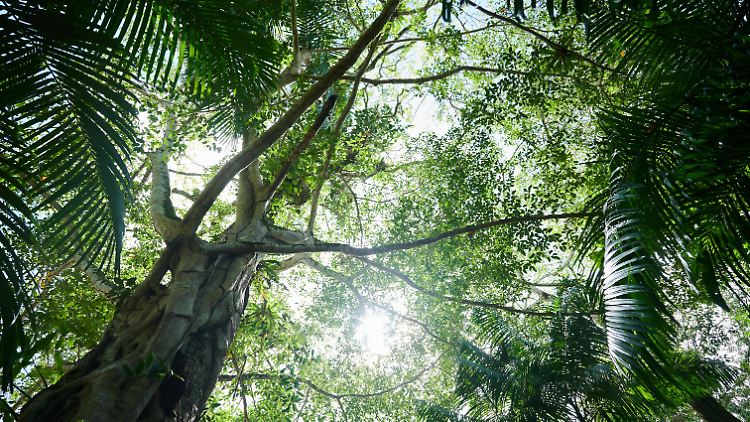
n-tv.de, 31.10.2025: “"Zero by 2030" Rainforest deforestation in Brazil continues to decline - Although an area twice the size of the Saarland region in Germany was destroyed in the Brazilian rainforest last year, this is the smallest amount since 2014. Ahead of the World Climate Conference, the Brazilian government promises to completely end the destruction by 2030.
According to Wikipedia, rainforests are characterized by large amounts of rainfall throughout the year. Tropical and subtropical forests, with approximately 1.3 trillion trees, make up over 40 percent of the world's tree population.
The Amazon rainforest formed around 40 million years ago. It covers nearly 6 million square kilometers and makes up more than half of the world's remaining tropical rainforest. Sixty percent of its area lies in Brazil. It is home to more plant and animal species than any other place on Earth.
Forests produce oxygen and are gigantic carbon sinks. When they are cleared, this carbon is released as carbon dioxide (CO2), the most prominent greenhouse gas and one of the biggest drivers of global warming. Furthermore, forests are water reservoirs and protect the soil from erosion and desiccation.
Tropical rainforests have been victims of deforestation, slash-and-burn agriculture, and climate change-induced wildfires for decades. The latter, in particular, represent a vicious cycle: the more forest burns, the more CO2 is released, exacerbating climate change and causing further wildfires.
According to a study by the "MapBiomas" initiative, approximately 52 million hectares of nature have been lost in the Brazilian Amazon since 1985—an area larger than Spain. Deforestation was accelerated, especially during the administration of President Jair Bolsonaro. In 2024, fires destroyed almost 18 million hectares of forest.
To date, approximately 20 percent of the Amazon rainforest has been deforested, and only one-third remains intact. "Intact" means that the forest generates half of its own rainfall.
The Amazon rainforest is considered a tipping point in the Earth's climate system. The tipping point is estimated to occur when 20 to 25% of the rainforest area is destroyed. In May 2025, researchers from the Instituto Nacional de Pesquisas Espaciais (INPE) noted significant declines in ecological resilience and attested to the approaching tipping point, at which large parts of the Amazon rainforest would no longer be able to recover.
The aforementioned article points to deforestation within a year of still nearly 6,000 square kilometers, which, however, represents a decrease of eleven percent compared to the same period last year. After the ruthless exploitation of the forest under the Bolsonaro administration, the current president, Luis Inácio Lula, has reversed course, reaffirming his commitment to the goal of reducing deforestation to zero by 2030 and aiming to make Brazil one of the leading countries in the fight against global warming.
Whether this turnaround will be sufficient to avert the tipping point remains to be seen. But it is encouraging when such a turnaround is vigorously approached. In many parts of the world, this is not the case, or the turnaround is reversing course backwards.
Addressing climate change involves not only warnings but also acknowledging progress. This headline was a good one. We hope for more of the same.